
Successful fundraising promotions don’t happen because a single social media post goes viral or one email reaches the right person. They succeed because organizations follow a clear plan that builds awareness over time, gives supporters multiple opportunities to engage, and makes it easy for people to take action.
Promoting a fundraiser can feel daunting, especially without a dedicated marketing team. But a clear plan — even a simple one — helps you reach the right people at the right time. Whether you’re running a small community event or a large-scale campaign, the framework below applies.
Here’s a step-by-step framework you can adapt to nearly any fundraiser.
How To Promote A Fundraiser: The Step-By-Step Process
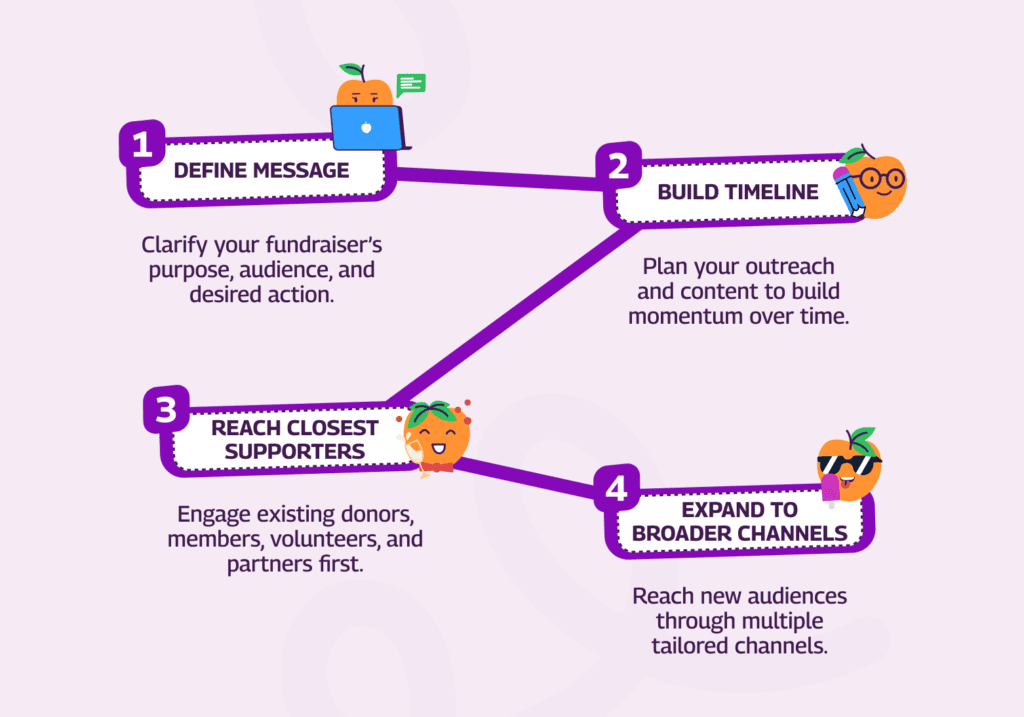
Whether you’re promoting a gala, peer-to-peer fundraiser, walkathon, online campaign, golf outing, or community event, the process stays the same.
- Define your message and goal.
- Build a promotion timeline.
- Reach your closest supporters first.
- Expand to broader channels.
Step 1: Define Your Message And Goal
Before creating promotional materials, decide exactly what you’re asking people to do and why it matters for your mission.
Start by answering these questions:
- What is the fundraiser supporting?
- What specific fundraising goal are you trying to reach?
- Who is your main audience?
- What action do you want people to take?
- Purchase event tickets
- Make a donation
- Create and share a fundraising page
- Become a sponsor
- Volunteer
Keep your message simple and focus on the impact, rather than the need. Instead of saying, “We need to raise $15,000,” explain, “Your donation supports our goal of providing 400 healthy meals to students this month.”
A story, photo, or beneficiary example gives people something concrete to connect with and share.
Step 2: Build A Promotion Timeline
One of the biggest fundraising promotion mistakes is waiting too long to start. Most successful campaigns build momentum over several weeks by sharing different types of content instead of repeating the same announcement.
A typical promotion timeline might look like this:
| 6 to 8 weeks out |
|
| 4 to 6 weeks out |
|
| 2 to 3 weeks out |
|
| Final Week |
|
Planning this content makes your marketing more consistent and reduces last-minute stress.
Tip: Promotion doesn’t end when the event does. Continue communicating with your fundraiser’s supporters by thanking attendees and donors, sharing donation totals and their impact, posting photos, and inviting them to stay involved.
Step 3: Reach Your Closest Supporters First
Your existing community is your strongest starting point. Begin by focusing on the people who already know and support your organization:
- Current donors
- Volunteers
- Members
- Event attendees from previous years
- Board members
- Staff
- Sponsors
These supporters are more likely to donate, register early, share fundraising pages and recruit their friends and network to engage and participate. Early registrations and donations signal momentum. People are more likely to give when they can see others already have.
Step 4: Expand To Broader Channels
Once your core supporters are engaged, expand to new audiences. Rather than relying on a single marketing channel, use multiple touchpoints so supporters encounter your fundraiser several times before taking action.
Potential promotional channels include standard email marketing, social media, and your organization’s website. But don’t forget about local media outlets, community newsletters, and local event calendars, partner and sponsor marketing opportunities, and printed flyers.
Seeing your fundraiser in multiple places helps build familiarity and increases the likelihood that supporters will act. That said, don’t use the same message everywhere. Tailor your content to each channel’s format and audience. For example:
- Impact stories and testimonials thrive on social media.
- Event details do best on your website, where most people will look first for more information.
- Send registration reminders by email to maximize visibility.
- Ask sponsors to feature the fundraiser in their newsletters.
- Submit your fundraiser to local community calendars.
Email-Specific Fundraiser Promotion Tactics
Email campaigns can make a significant impact when done right. They are consistently ranked as one of the most successful promotional tools, as you’re often reaching out to people already interested in your organization’s mission.
Include a high-visibility ”Donate Now” button or registration link that directs recipients to your fundraiser’s page.
Tip: Some platforms let you set up automated email sequences, saving you time and effort.
Social Media-Specific Fundraiser Promotion Tactics
Social media lets you meet supporters where they already are and gives your most engaged followers an easy way to spread the word.
Here’s how to do it effectively:
- Create a Content Calendar: Plan your posts, including key dates like your fundraiser launch, milestones, and reminders.
- Leverage Stories and Reels: Short-form content, such as Instagram Stories or TikTok videos, is highly engaging and easy to share.
- Engage With Your Audience: Respond to comments, ask questions and create polls to keep your followers involved.
- Partner With Influencers: Collaborate with local influencers or well-known community members to amplify your reach.
- Use Hashtags: Create an event-specific hashtag and use it consistently before, during, and after your event.
In-Person And Community Promotion Tactics
Your local community is one of your most underused promotion channels. Here’s how to tap into local networks:
- Local Media: Reach out to local newspapers and radio stations with a compelling press release. Highlight what makes your event newsworthy.
- Donors and Supporters: Mobilize your existing supporters to help spread the word. This can include sharing on social media, handing out flyers, or hosting mini-events to promote your primary fundraiser.
- Storytelling: Share testimonials, case studies, and personal anecdotes that illustrate your cause’s impact. When people connect with a story, they’re more likely to act (and donate).
Partnerships help you reach audiences you’d otherwise miss. Partnering with local businesses, schools, and organizations that share your goals can help you leverage their networks and resources:
- Partner with Local Businesses: Local businesses are often happy to support nonprofit initiatives — especially when they align with their values or customer base. Approach them with a clear proposal and explain how a partnership would benefit both of you. For example, ask a restaurant to host a giveback night where a portion of sales goes toward your cause. You get much-needed funding, and they get a new crowd visiting their establishment.
- Leverage School and Club Partnerships: Clubs, schools and community groups are excellent allies for fundraisers. They often have enthusiastic members who can help with outreach, volunteer efforts, or even performance opportunities during your event. Consider connecting with sports teams, art clubs, or parent-teacher organizations. These partnerships create a ripple effect of engagement.
- Involve Influencers in Your Community: Endorsement or promotion/participation from celebrated figures, such as local politicians or business leaders, adds both attention and credibility to your fundraiser.
Measuring Fundraiser Promotion Success
Promoting a fundraiser involves many of moving parts. The right tools can take the coordination work off your plate. For example, software can help you:
- Centralize Email and Contact Management: A contact database makes it so much easier to segment your audience and send targeted emails. Whether you’re reaching out to past donors or inviting new attendees, tools like email automation ensure your message reaches the right people.
- Build a Membership Website: With a membership website builder, you can create a hub for your fundraiser. Share your story, event details, and donation options in one easy-to-navigate space.
- Simplify Event Management: Managing registrations, tracking attendees and collecting payments doesn’t have to be a headache. Event management tools simplify the process, letting you focus on making your event memorable.
- Online Store and Payment Processing: If your fundraiser includes merchandise or ticket sales, an online store with integrated payment processing can handle transactions smoothly.
- Real-Time Data Tracking: Monitor your campaign’s success with data-tracking and reporting tools. Knowing what works lets you adjust your approach for better results next time.
Ready to take some of the stress out of promoting your fundraiser? WildApricot handles the logistics—website, email, payments, donor tracking—so your team can stay focused on the work that moves your mission forward.
FAQs
How far in advance should I start promoting a fundraiser?
Most successful campaigns build momentum over several weeks by sharing different types of content instead of repeating the same announcement. A typical timeline might start by announcing the fundraiser and opening registration 6-8 weeks in advance. That will give you enough time to contact your sponsors and volunteers. The main thing: don’t wait until the last minute.
What should a fundraiser promotion email include?
Consider a nurture campaign (a series of emails) rather than a single announcement. The nurture series could include the original announcement email, a registration reminder (early-bird dates) email, an impact or success story email, a progress update email, last-chance-to-register/donate reminder emails, and a post-event recap and thank-you email! Tip: Make your call to action easy to spot — a prominent button with clear text like “Donate Now” or “Register Today.”
How do I promote a fundraiser with no marketing budget?
There are several free ways to promote a fundraiser:
- Focus on the relationships you already have. Start with your existing supporters, volunteers, and past donors, and encourage them to share the fundraising campaign with their networks.
- Reach out to community partners who could include your fundraiser in their newsletters or on their social channels.
- Social media offers many free avenues, such as local event calendars and community groups, that can expand your reach at no cost.
How do I keep supporters engaged throughout the campaign?
Give supporters fresh reasons to stay involved throughout the fundraiser.
- Share progress toward your fundraising goal.
- Celebrate milestones.
- Highlight beneficiary stories.
- Recognize sponsors, donors, and volunteers (with their permission).
- Provide updates on how contributions will make a difference.
- As the campaign nears its end, remind supporters of upcoming deadlines and remaining fundraising goals.
- Follow up afterward with results and a sincere thank-you to reinforce trust and encourage future participation.